
Fix It Now or Fix It During a Breakdown

There are two times to replace a hydraulic hose:
When you planned to.
And when the hose decides for you.
One of those usually happens at a convenient time. The other tends to happen when production is moving, people are waiting, equipment is needed, and nobody has time for a surprise.
A Hose Doesn’t Have to Be Damaged to Be a Problem
It’s easy to look at a hose that is still doing its job and think, We’ll deal with that later.
But hydraulic hoses take a beating. Heat, pressure, movement, abrasion, weather, chemicals, and everyday wear all add up over time.
Some warning signs are obvious:
Cracks or visible damage to the outer cover
Abrasion or areas where the hose has been rubbing
Exposed reinforcement
Leaks around fittings
Kinks, twists, or crushed sections
Corrosion or damage around couplings
Others are simply a matter of knowing the hose has been working hard for a long time.
The question isn’t always, “Is it broken?”
Sometimes the better question is, “Do we really want to wait until it has failed?”
Scheduled Downtime Is Cheaper Than Surprise Downtime
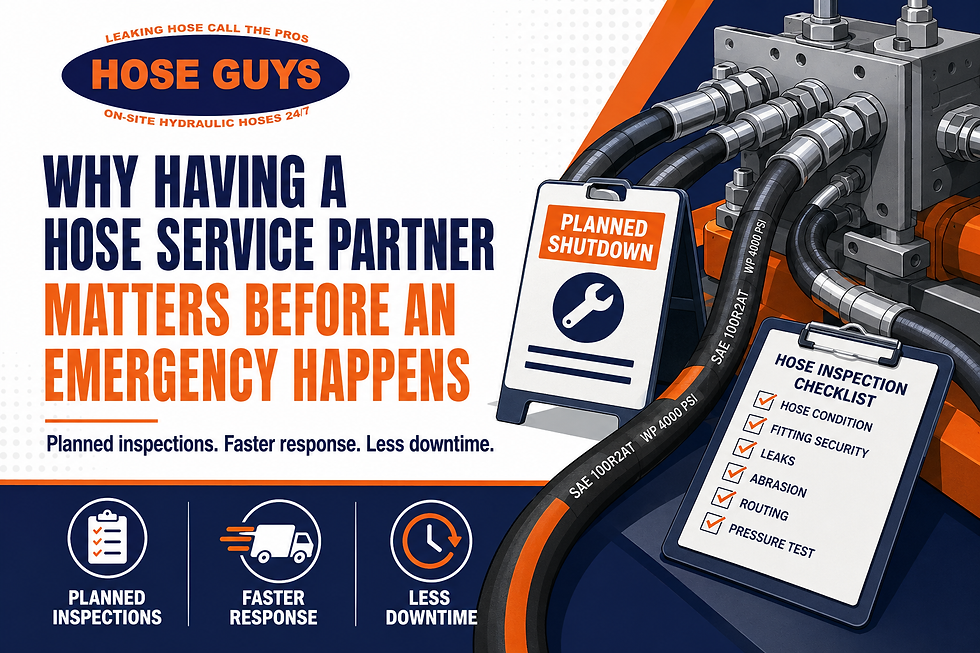
When equipment is already down for routine service, repairs, cleaning, or other scheduled work, it can be a good opportunity to look at the hoses too.
If one is questionable, replacing it while the machine is already offline can save a much bigger headache later.
Because once a hose fails, the cost isn’t limited to the hose itself.
Now you may be dealing with:
Equipment sitting idle
Employees waiting
Delayed production
Cleanup
Lost hydraulic fluid
An emergency repair instead of a planned one
A relatively small repair can suddenly become the most important thing happening that day.
“We’ll Get One More Month Out of It” Maybe...
Hydraulic hoses, unfortunately, are not known for checking the production calendar before they fail.
A hose that looks worn today might keep working for quite a while.
Or it might become tomorrow morning’s emergency.
That doesn’t mean every hose needs to be replaced at the first scuff mark. It means questionable hoses deserve a closer look before they get promoted from something to keep an eye on to the reason everything stopped.
Take a Look While You Have the Chance
The next time your equipment is already down, take a few minutes to look over the hydraulic hoses.
Check the routing. Look for rubbing. Inspect the fittings. Pay attention to visible wear and anything that simply doesn’t look right.
Finding a potential problem when you have time to deal with it is much better than discovering it when the machine is supposed to be running.
And if you’re not sure whether a hose has a little life left in it or is trying to tell you something, give Hose Guys a call.
Because “we caught it early” is a much better way to start the story than “everything was running fine until…”


Comments